
Human Factors & Civilian Armoured Vehicle Fleet Performance: How Lessons Learned Improves Driver & Team Effectiveness
In civilian armoured vehicle operations, fleet performance is not driven by machinery alone.
Driver decision-making, team coordination, communication, fatigue management, and operational discipline all play a critical role in safety and mission success.
Yet human factors are often overlooked in fleet management.
Vehicle incidents may be attributed to mechanical issues or environmental conditions, while the operational behaviours, training gaps, procedural weaknesses, or team dynamics behind those events go insufficiently examined.
The result? Repeat incidents, avoidable errors, inconsistent operational performance, increased safety risk, and missed opportunities for improvement.
From Civilian Armoured Vehicle Operational Events to Human Performance Intelligence
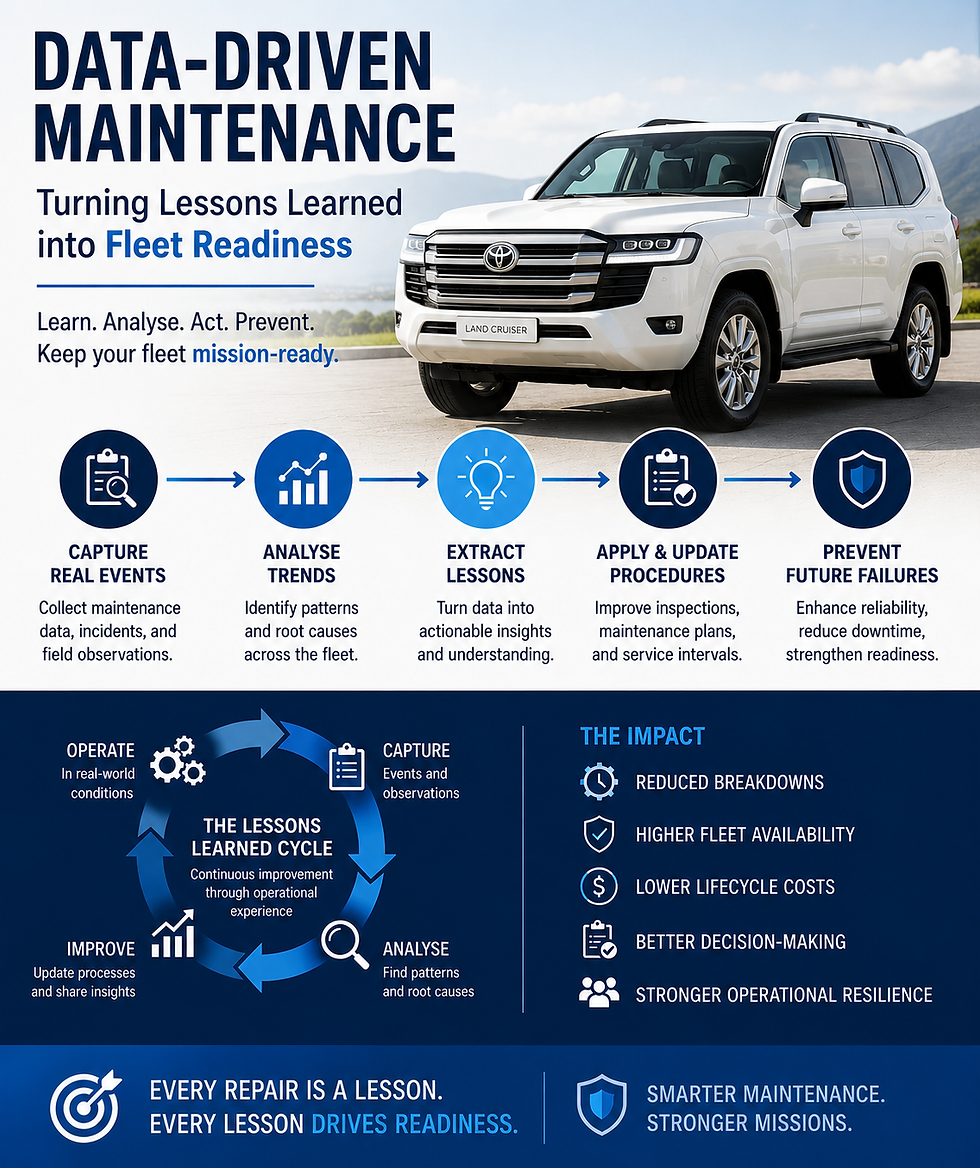
At Armoured Consulting, our structured Lessons Learned methodology transforms operational experience into actionable insights that improve driver and team effectiveness.
This includes:
🔍 Incident Review – Analysing operational events, driver actions, team responses, and decision-making through structured root cause analysis.
📊 Trend Analysis – Identifying recurring behavioural patterns, procedural weaknesses, communication gaps, and training shortfalls.
🗂 Structured Data Capture – Standardising operational observations, driver reports, incident feedback, and performance data.
⚙️ Actionable Output – Turning findings into revised training programmes, SOP updates, driver coaching, and operational protocol improvements.
Human Factors in Practice
Lessons Learned helps organisations identify behavioural and operational risks before they contribute to larger failures.
Examples include:
• Repeat driving incidents revealing gaps in route discipline or situational awareness• Team debriefs highlighting communication breakdowns during critical events• Fatigue trends contributing to reduced driver performance• Operational patterns exposing training or procedural weaknesses
This enables organisations to strengthen human performance, improve decision-making, and enhance team coordination in real-world operations.
The Results
A lessons-driven human factors strategy delivers:
✅ Improved driver performance
✅ Stronger team coordination
✅ Better training effectiveness
✅ Reduced operational errors
✅ Enhanced fleet safety and resilience
Instead of reacting to incidents, organisations begin improving the people and processes behind fleet performance.
Final Thoughts
Every incident contains data.Every human error reveals a signal.Every operational challenge offers a lesson.
The question is whether organisations capture that knowledge — and act on it.
By integrating a structured Lessons Learned methodology into driver training, operational review, and team performance management, organisations can strengthen safety, improve decision-making, and enhance operational readiness across their armoured fleets.
In high-risk operations, fleet performance is built as much by people as by vehicles.


Comments